When a small mistake becomes a public judgement
A colleague turns a typo into a verdict on your ability. How can you own the error without accepting the label?
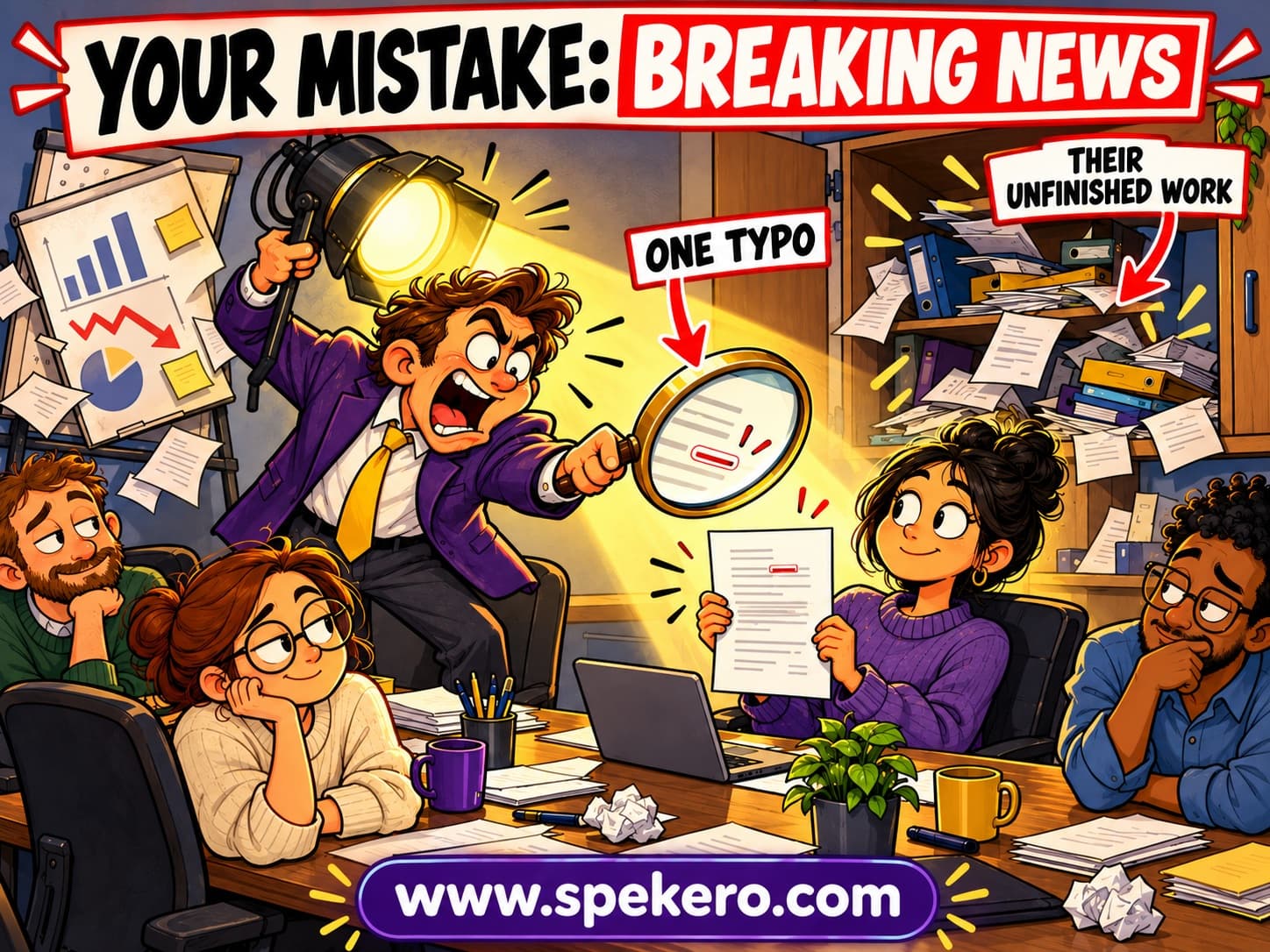
The situation
In a team meeting, a colleague points out one typo in your draft and says, 'This is why we can't rely on your work.' The typo is real, but the rest of the draft has been checked and no decision depended on it.
You have also noticed unfinished work from this colleague. You feel tempted to list their mistakes in front of everyone. Your immediate aim is to correct the draft and keep the meeting useful, without accepting an unfair judgement about your competence.
Recommended Response
D. Say, 'Thanks for spotting the typo; I'll correct it. If there are other specific concerns, let's review them. Please keep feedback focused on the work.'
This owns the real error, invites evidence for any further concerns and sets a respectful boundary. It helps distinguish a fixable mistake from an unsupported judgement about you.
Context matters. This is a recommendation for the situation described, not a rule for every interaction.
Explore every response
A. Deny the typo because admitting it would prove their criticism right.
Acknowledging a small factual error does not require accepting a broad label. Denying something visible can weaken your credibility and delay a straightforward correction.
B. Read out a list of their mistakes so the team can decide who is less competent.
Their work may need attention too, but using it as a counterattack risks turning the meeting into a personal contest. Raise relevant work concerns separately with clear evidence and a practical purpose.
C. Apologise for being unreliable and promise never to make another mistake.
Taking responsibility is useful; accepting an unsupported label is not. A promise of perfect work is unrealistic and does not establish a sensible way to review errors.
D. Say, 'Thanks for spotting the typo; I'll correct it. If there are other specific concerns, let's review them. Please keep feedback focused on the work.' (Recommended)
This owns the real error, invites evidence for any further concerns and sets a respectful boundary. It helps distinguish a fixable mistake from an unsupported judgement about you.
Why is D the recommended response?
Accountability without self-condemnation
Two things can be true: your draft contains an error, and the public conclusion about your reliability is disproportionate to the evidence given. Correcting the first does not mean agreeing with the second. A short factual reply keeps those issues separate.
I will make that correction. Which other part of the draft needs review?
Keep the response proportionate
In this scenario the typo has not affected a decision. A more consequential error would need a fuller response, including checking impact and preventing repetition. Do not minimise a genuine risk simply because the delivery of the criticism was unfair.
The colleague's unfinished work does not erase your mistake, just as your typo does not excuse a personal attack. If there is a repeated pattern of public humiliation, keep factual notes and consider a trusted manager or appropriate workplace support. A calm sentence is not a guarantee that the other person will behave reasonably; leaving a hostile exchange may be the safer choice.
What can we learn?
- Acknowledge what is accurate and correct what you can.
- Ask for specific examples when criticism becomes a broad label.
- Separate a work-quality concern from a concern about how you are being treated.
- Do not promise perfection or use someone else's errors as permission to ignore your own.
A deeper question to reflect on
When criticised, do you tend to deny the whole message or accept all of it? How could you separate facts from interpretation?
Key takeaway
Own the mistake, not an unsupported judgement of your whole ability.
Practice. Speak. Improve. — Spekero Playground