When people make assumptions
A takeaway becomes a judgement about your character. Can you set a boundary without having to justify your whole life?
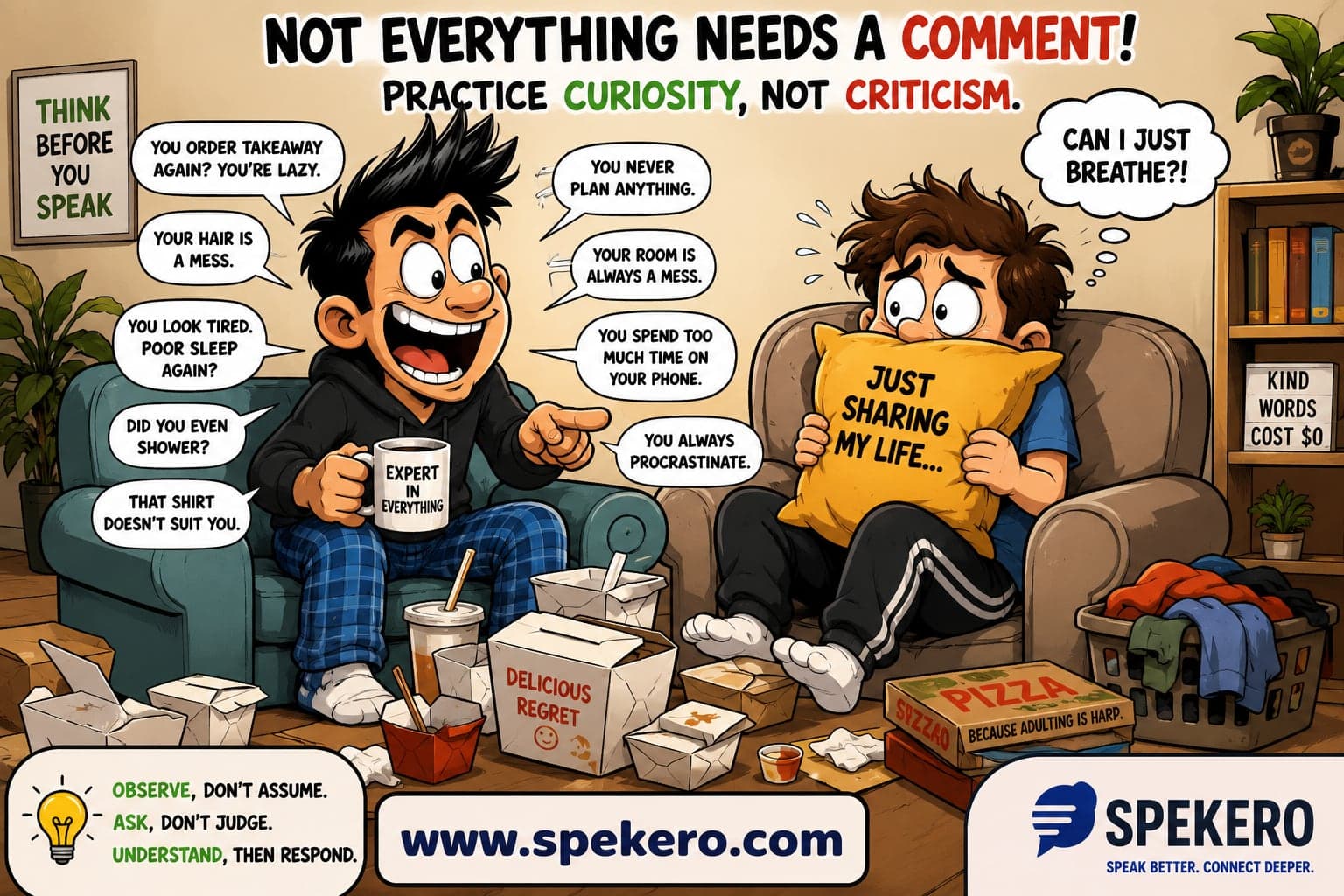
The situation
You invite a friend over after a busy week. When they see takeaway boxes, they say, 'Takeaway again? You're so lazy. You never plan anything.' They then comment on your clothes and the room.
There are things going on in your life that they do not know about. You do not want to discuss them, but you do want the comments to stop. You feel safe enough to speak directly to this friend.
Recommended Response
B. Say, 'You don't know the full situation. Please don't label me lazy. I would rather enjoy our time together without comments on my habits.'
This separates an observation from a character judgement, states the behaviour you want to stop, and offers a respectful way to continue. It protects your privacy without attacking theirs.
Context matters. This is a recommendation for the situation described, not a rule for every interaction.
Explore every response
A. Explain every private difficulty so they understand why their judgement is unfair.
Sharing context can help when you want to share it. But you do not have to disclose personal difficulties to earn basic respect, and an exhaustive defence can turn a boundary into a debate.
B. Say, 'You don't know the full situation. Please don't label me lazy. I would rather enjoy our time together without comments on my habits.' (Recommended)
This separates an observation from a character judgement, states the behaviour you want to stop, and offers a respectful way to continue. It protects your privacy without attacking theirs.
C. Point out everything wrong with their life so they know how it feels.
It is understandable to want them to recognise the hurt. Returning personal criticism may instead start a contest over who is worse and distract from the boundary you need.
D. Laugh along and agree that you are lazy, even though you feel hurt.
Humour can defuse tension when it is genuinely comfortable. Here, agreeing with an unwanted label hides your objection and gives your friend little reason to change the comments.
Why is B the recommended response?
Why is this response recommended?
The issue is not whether takeaway is a good choice. It is the leap from one visible choice to a sweeping claim about your character. A useful response challenges that leap and names what respectful interaction would look like. You can keep the message short; a boundary does not require a complete account of your circumstances.
I'm not asking you to agree with every choice. I'm asking you not to make personal comments about me.
Observation is not the whole story
Seeing a room or a meal tells us very little about someone's resources, responsibilities or priorities. The friend might think they are helping, joking or expressing concern. Those possibilities do not establish their intention, and good intentions would not erase the impact. Discuss the specific comment rather than diagnosing the person who made it.
Curiosity is an alternative to criticism, but it should still respect privacy. Sometimes the considerate choice is to leave a harmless personal decision alone. You can also reflect on whether you make similar assumptions about other people.
What can we learn?
- Separate what you actually observed from the story you added to it.
- Describe the comment and your request, rather than insulting the person's character.
- Share personal context by choice, not as the price of being treated respectfully.
- If the comments continue, end or shorten the visit. If directness feels unsafe, prioritise distance and support instead.
A deeper question to reflect on
When have you turned a small observation into a whole story about someone? What information was missing?
Key takeaway
You can challenge an assumption without surrendering your privacy.
Practice. Speak. Improve. — Spekero Playground